
Oct 19, 2026
AI Sales Agent vs AI Chatbot: What's the Difference?
Understand the fundamental differences between an AI sales agent and a basic AI chatbot. Learn how switching to an AI sales agent boosts conversions and automates sales pipelines.
By Second Source 6 min read
Introduction
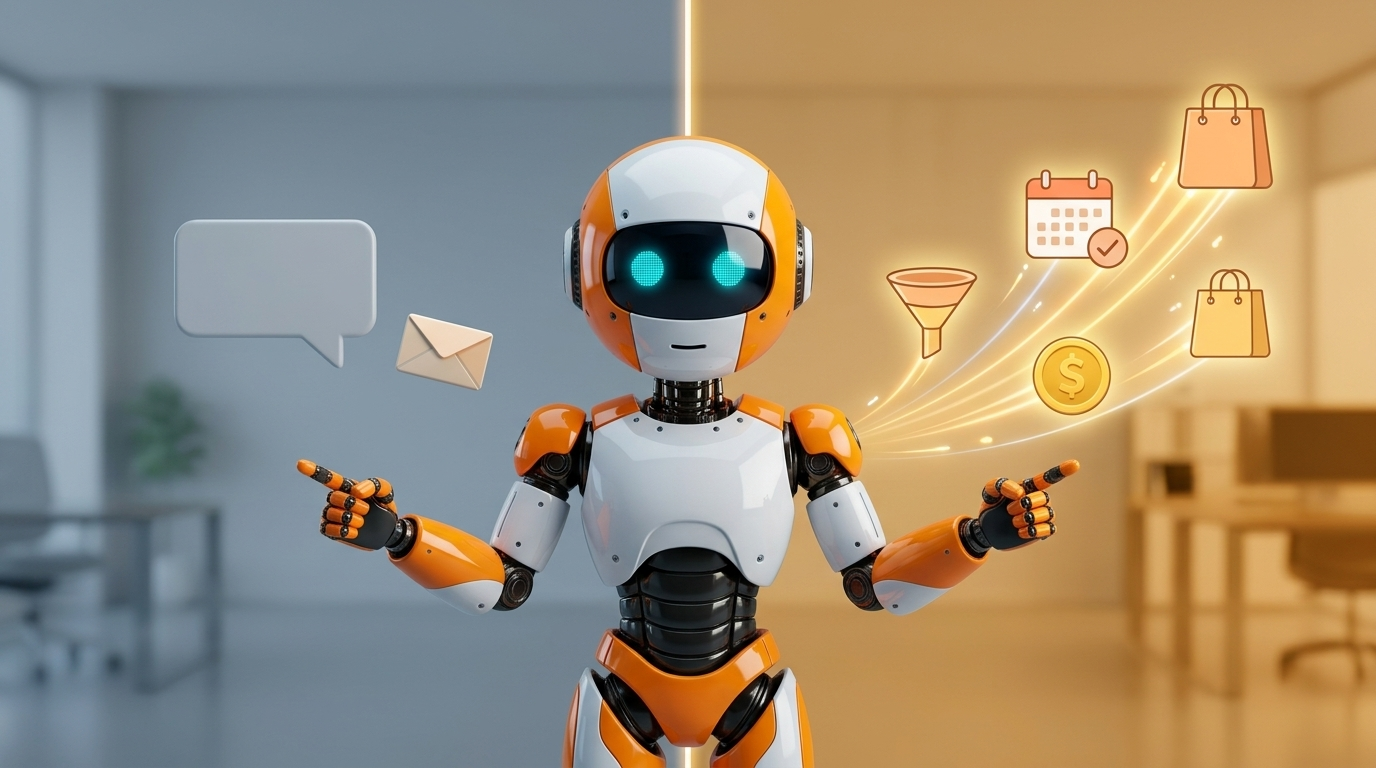
As conversational technology rapidly evolves, business owners frequently hear the terms AI Chatbot and AI Sales Agent used interchangeably. However, behind the scenes, these two automated tools serve vastly different business objectives, operate on different technology architectures, and deliver dramatically different return on investment (ROI).
Deploying a standard AI chatbot usually means providing reactive customer service—answering basic questions about business hours, return policies, or shipping fees. On the other hand, deploying an AI Sales Agent means adding an active, 24/7 digital sales team member designed specifically to engage prospects, qualify leads, recommend products, and close sales automatically.
If you are just beginning to explore conversational solutions, check out our baseline guide on What Is an AI Sales Agent? Features, Benefits, and Use Cases. In this article, we will break down the primary differences between AI sales agents and standard AI chatbots so you can choose the best fit for your business goals.
1. Reactive Support vs. Proactive Engagement
The fundamental difference between these two technologies lies in how they initiate interaction.
Standard AI Chatbot (Reactive)
A traditional chatbot sits passively at the bottom corner of a website. It waits for the user to open the chat window, type a question, or select a predefined button. If a visitor hesitates on a pricing page or cart page, the chatbot remains inactive until prompted.
AI Sales Agent (Proactive)
An AI sales agent actively tracks visitor behavior—detecting exit intent, page dwell time, or repeated visits to high-value pages. It initiates personalized conversations based on what the prospect is viewing:
"Need help choosing between our Growth and Scale subscription plans?"
"I notice you're evaluating our Enterprise features. Would you like a quick demo comparison?"
By engaging visitors at the exact moment of decision-making, an AI sales agent prevents bounces and captures intent while it is highest.
2. Static Knowledge vs. Dynamic System Action
How each tool utilizes data determines whether it acts as an informational signpost or an active converter.
[ Traditional Chatbot ] ──► "Here is a link to our pricing page."
[ AI Sales Agent ]      ──► "Based on your team size of 15, Plan B is best. Here is your 1-click checkout link."
Traditional AI Chatbots
Standard chatbots pull answers from fixed knowledge bases or pre-written decision trees. When asked a purchasing question, they usually point users to a URL or suggest contacting support.
AI Sales Agents
An AI sales agent integrates deeply with your operational software stack (such as Shopify, HubSpot, Salesforce, or Stripe). It can execute real-time actions during the conversation:
Checking live warehouse inventory for specific sizes or colors.
Querying pricing engines to offer personalized discounts.
Creating pre-filled checkout links or booking sales calls directly into calendar schedules.
To learn more about direct transactional capabilities, explore our article on Can an AI Agent Sell Products Automatically?.
3. Basic Data Collection vs. Intelligent Lead Qualification
Capturing contact information is only useful if your sales team knows which prospects are worth calling back immediately.
Standard AI Chatbot
A basic chatbot typically asks visitors to fill out standard text fields (Name, Email, Phone Number) before routing the ticket to an inbox. It treats all inquiries equally, regardless of buying power or intent.
AI Sales Agent
An AI sales agent uses established framework questioning (such as BANT or MEDDIC) to evaluate lead fit in real time:
Evaluates Budget & Need: Determines if the buyer meets your ideal customer profile (ICP).
Assigns Lead Scores: Categorizes leads as Hot, Warm, or Cold based on their chat responses.
Smart Routing: High-value enterprise leads are instantly routed to account executives, while casual browsers are directed to self-serve FAQs.
For an in-depth breakdown of automated screening, see our post on How Do AI Sales Agents Qualify Leads Automatically?.
Which Tool Does Your Business Need?
Choosing between an AI chatbot and an AI sales agent depends on your primary business objectives:
Choose a Standard AI Chatbot if:
Your main goal is reducing high volumes of repetitive support tickets (e.g., shipping updates, store locations).
You only need basic FAQ answering without direct system actions.
Choose an AI Sales Agent if:
Your goal is increasing website conversion rates and driving online revenue.
You want to qualify high-intent buyers and book sales demo calls automatically 24/7.
You need deep integration with your CRM, e-commerce storefront, and payment gateways.
How EZ AI Transforms Your Sales Pipeline
With EZ AI, migrating from a passive chat widget to an active sales automation engine is fast and simple:
Connect Your Infrastructure: Link your site content, CRM system, and e-commerce catalogs.
Configure Conversion Rules: Set up behavioral engagement triggers, qualification parameters, and booking rules.
Launch & Scale: Embed the lightweight widget script and convert passive site traffic into active revenue 24/7.
Frequently Asked Questions (FAQs)
Q1: Is an AI sales agent harder to set up than a traditional AI chatbot?
A: No, modern platforms like EZ AI make setting up an AI sales agent straightforward. You simply connect your website URLs, FAQs, and CRM integrations without writing custom code.
Q2: Can an AI sales agent also handle customer support questions?
A: Yes, an AI sales agent handles routine support questions while actively identifying upsell, cross-sell, and lead qualification opportunities during the conversation.
Q3: How do AI sales agents increase conversion rates compared to standard chatbots?
A: By initiating proactive conversations at key moments, answering buyer objections instantly, and delivering one-click checkout or booking links, AI sales agents remove friction from the buyer journey.
Q4: Does an AI sales agent replace human sales representatives?
A: No, it assists human teams by filtering out unqualified queries and scheduling meetings with pre-screened, high-intent prospects, allowing reps to focus on closing deals.
Q5: Can AI sales agents work across multi-channel platforms?
A: Yes, AI sales engines can be deployed on website chat widgets as well as across social commerce channels like Facebook Messenger, Instagram DMs, and WhatsApp.
Conclusion
Understanding the difference between an AI chatbot and an AI sales agent is essential for building a high-converting digital presence. While standard chatbots handle basic support tickets, AI sales agents serve as proactive, 24/7 revenue drivers that engage visitors, qualify prospects, and close transactions automatically.
Ready to upgrade your website from passive chatting to automated selling? Explore how EZ AI Automation can power your sales pipeline today, or learn more in our detailed operational guide: How to Automate Sales Conversations on Your Website.